DISCLAIMER:The opinions expressed in this blog are mine and do not necessarily reflect the views of the firm, its clients, or any of its or their respective affiliates. This article is for general information purposes and is not intended to be and should not be taken as legal advice.
Friday, March 19, 2010
Transcript of Senate's hearing about Comcast/NBC merger
Monday, November 30, 2009
Case Log at the Supreme Court
Saturday, October 24, 2009
Journal submission guideline
1. JPTOS
The Editors welcome the submission of articles consistent with the Journal's stated objectives.
Receipt of manuscripts will be acknowledged and authors will be further advised as to whether or not their papers are acceptable for publication. Upon publication authors will be sent two (2) complimentary copies of the issue in which their article appears. All articles published will be automatically considered for the Rossman Award.
» All manuscripts must be typewritten, double-spaced and should preferably be submitted in duplicate.
» Authors are encouraged to submit their manuscripts on disc and/or e-mail
» To expedite publication fax this license grant to 571-273-6887 once it is filled out and signed.
» If you have questions about requirements for, or how to submit, a manuscript you may contact Jeffrey Gellner, Editor-In-Chief.
» Printer's deadline does not permit forwarding of galley proofs to authors for their corrections.
» Proof-reading is a responsibility of The JPTOS.
Send Articles to Editor at:
Jeffrey Gellner
EDITOR-IN-CHIEF
P.O. BOX 2600
ARLINGTON,VA 22202
2. NC (http://jolt.unc.edu/)
Submission Policies
The Journal welcomes articles, notes and comments for publication. Shorter pieces are welcomed for consideration in our online edition. NC JOLT publishes two hardcopy issues per year, as well as a rolling publication online edition. Professors and practitioners are encouraged to submit papers on contemporary issues in the fields of law, science, and technology. The Journal also welcomes suggestions for future topics of research.
Submissions may be made via e-mail or US mail, and must be accompanied by the author’s address, telephone number, fax number, and email address. Please indicate if the item has been previously published or is under consideration for publication elsewhere.
Email submissions
The document may be sent as an email attachment, complete with abstract, to submissions@ncjolt.org
US mail submissions:
Submissions should include two hardcopies and a disk copy of the article. The disk copy must be in MS Word or WordPerfect format. The disk should be labeled with the author’s name and the filename of the document. Materials submitted for consideration will not be returned.
Please forward materials to:
University of North Carolina at Chapel Hill
Journal of Law and Technology
Van-Hecke Wettach Hall
CB # 3380
Chapel Hill, North Carolina 27599
Format
Papers must not exceed 45 double spaced pages including footnotes and endnotes, which should also be double spaced. An abstract of approximately 250 words and a table of contents is required. All submissions must conform to The Chicago Manual of Style (14th Ed.) and The Bluebook: A Uniform System of Citation (18th Ed.).
For further information contact a JOLT editor by e-mailing submissions@ncjolt.org.
3. VA http://www.vjolt.net/submit.php
Submissions Guidelines The Journal is pleased to accept submissions from members of the legal and scientific communities with experience and insights into issues at the intersection of the law and technology. We prefer to receive submissions by email for the sake of mutual convenience. Please attach the article as Word document or PDF along with a résumé or C.V., a cover letter if desired, and a brief abstract of the article (<250> We are also happy to accept submissions through ExpressO, an electronic submission service of the Berkeley Electronic Press, and through SSRN, an electronic submission service administered by the Social Science Research Network. We do not accept hard copy submissions by postal mail. Thank you for your interest in the Virginia Journal of Law & Technology.
The Editors of the Journal welcome submissions for publication consideration. Deadline: All manuscripts sent by e-mail and post for consideration by the Journal are evaluated on a rolling basis. Upon request, the Journal may grant expedited reviews providing authors with a decision within 48 hours of submission. Please contact Tamera Kennard or Ryan Phelan, Executive Editors, for the Journal’s expedited review policy. Contact Information: Please send your submission electronically, by e-mailing the manuscript as a Word attachment to njtip@nlaw.northwestern.edu, or mail it to the following address: Northwestern Journal of Technology and Intellectual Property Format: All submissions should be double-spaced with one-inch margins. The Journal uses Microsoft Word for all word-processing. Accordingly, all manuscripts must be submitted in Microsoft Word format. If you are submitting via postal mail, the Journal requests that you supply and submit one paper copy of the manuscript and one electronic copy on a 3 1/2 inch PC-compatible floppy disk or a PC-compatible CD-ROM. All footnoted text should be double-spaced and numbered serially. The journal uses footnote standard citing, and all footnotes and citations to authority should conform to The Bluebook: A Uniform System of Citation, Eighteenth Edition, published by the Harvard Law Review Association. Content: The Editors of the Journal seek submissions in the area of intellectual property law - particularly copyrights, entertainment law, Internet law, patents, comments on pending legislation or recent IP case decisions, telecommunications, trademarks, and trade secrets. In addition to notes, comments, and scholarly articles, we are also accepting submissions of shorter, approximately 500-2,000 word "perspectives" pieces. Examples of perspectives pieces include a short comment on a recent important development or issue in IP law, or an analysis of an interesting current IP case. Our Journal is published online, and the scholarly articles, case notes, comments, and working papers will be disseminated in electronic search databases such as LexisNexis and Westlaw. Publication: It is the policy of the Journal not to publish articles that have appeared or are to appear in other publications. Accordingly, all manuscripts should be submitted with the understanding that the Journal possesses the exclusive right of original publication. For various clerical reasons, the Journal requests that each author assign copyright to the Northwestern University School of Law for the collected work. While permitting the author unlimited use of the article, it offers the author the ordinary copyright protection. Copyrights will be taken out in the name of Northwestern University School of Law, and requests for permission to reprint your article will be processed by Northwestern University School of Law. A total of twenty-five reprints are supplied gratis to the author or authors of each article. Additional reprints may be obtained by arrangement with the Editors of the Journal prior to publication, or by arrangement with the printer after publication. Questions: Please direct all inquiries to Kenneth Jenq or Jessica Talati, Executive Editors. 5. John Marshall http://www.jcil.org/journal/submission/index.html
Northwestern University School of Law
357 East Chicago Avenue
Chicago, IL 60611-3069
Manuscript Submission
The John Marshall Journal of Computer & Information Law is always looking to publish new and innovative articles regarding the latest issues in information technology and privacy law. The Journal therefore welcomes unsolicited manuscripts, either in hard-copy format or through electronic mail. Additionally, due to the fact the Journal is a quarterly publication, it accepts articles on a rolling basis throughout the year.
The Journal requests that any submitted manuscripts conform to the following requirements.
Citations
The preferred citation style of manuscripts conforms to The Bluebook Uniform System of Citation, 18th Edition.
Submissions
Electronic Submissions
- Electronic copies of manuscripts are preferred.
- Please e-mail files in Microsoft Word or rich text format.
- If compressing files, please use the Zip compression standard.
- Please include a copy of your resume.
Hard Copy Submissions
If submitting a hard copy of a manuscript, please send a resume and two copies of the manuscript to:
The John Marshall Journal of Computer & Information Law
Attn: Solicitation Editor
315 S. Plymouth Court
Chicago, IL 60604
Timeframe & Notice
The Journal makes every attempt to send an acknowledgement of the receipt of any manuscript within forty-eight hours of receiving it. The Journal also makes every attempt to notify a manuscript author within two weeks of receiving a submission as to whether the Journal will publish the article.
If you do not receive an acknowledgement that your submission has been received or as to the submission's status for possible publication, please do not hesitate to contact a Solicitation Editor at 5jcil@stu.jmls.edu.
Call for Papers
The Journal is considering articles for publication in future issues. In addition to our already broad topic range, we are currently seeking articles examining President Obama's technology agenda. As this new administration implements policies and programs integrating technology, it will affect individuals, businesses, education, information accessibility, science, healthcare, communication, the environment, and the economy. A complete treatment of any of these topics should include a description and analysis of the relevant technology and a discussion of the implications for individuals, groups, or other countries. Ideally, submissions should offer suggestions on how to proceed on any issues discussed. For more information, contact the Journal's Solicitation Editor at 5jcil@stu.jmls.edu.
Additional Questions
If you have any additional questions regarding Journal submissions, please e-mail the Journal and direct all questions to either one of the Solicitation Editors or the Editor-in-Chief.
Thank you for your interest in the John Marshall Journal of Computer & Information Law.
6. Suffolk http://www.law.suffolk.edu/highlights/stuorgs/jhtl/submit/index.html
SUBMIT
Article Submissions
Articles published in the Journal of High Technology Law (JHTL) are submitted by judges, legal scholars, and other authorities in various fields of law. Lead Articles should be scholarly in style and contain incisive analysis, informed opinion, and content of interest to the legal community. JHTL seeks a diversity of subject matter and occasionally accepts an article focusing on issues from broader social perspectives in addition to articles reflecting traditional legal analyses.
JHTL carefully considers each manuscript received. Upon submission, the Lead Articles Department reviews the article and tentatively decides whether it is of publishable quality. After preliminary research about the author and the area of law covered by the article, the Lead Articles Editors, in conjunction with the Editor-in-Chief and Managing Editor, decide whether to extend an offer to the author. If the author accepts, JHTL members check the substantive and technical accuracy of the piece, and make grammatical and stylistic suggestions. Although JHTL defers to authors in stylistic matters, the editorial board cannot sacrifice the substantive and technical accuracy of articles.
You may submit articles to the Journal of High Technology Law via email or standard mail. Footnotes should conform to the standards set forth in The Bluebook: A Uniform System of Citation (18th ed. 2005). Please visit these Web sites for more information on The Bluebook citation standards:
www.legalbluebook.com
www.law.cornell.edu/citation
Submissions by Email
Send an email with an attached copy of your article as a Microsoft Word document to articles@jhtl.org. Please include your full name, institution, professional position, mailing address, and telephone number(s).
Submissions by Mail
Send one copy of your article with a cover letter containing the above contact information to the following address:
| Lead Articles Editor |
| Journal of High Technology Law Suffolk University Law School Suite 450B 120 Tremont Street Boston, MA 02108 |
Tuesday, October 13, 2009
Grammar: Articles
I had difficulty in writing correct articles in right positions.
Tuesday, May 26, 2009
Texas Bar Exam format
On day one, a Procedure/Evidence exam and one 90-minute Multistate Performance Test question are given.
On day two, the Multistate Bar Exam is administered.
On day three, twelve essay questions are given.
The MBE counts for 40%.
The essay questions count for 40%.
The MPT counts for 10%.
The Procedure/Evidence exam counts for 10%.
Wednesday, May 20, 2009
Journals for publication
North Carolina,
Virginia,
Northwestern,
John Marshall
Suffolk.
Tuesday, May 12, 2009
Best Law schools for IP law
2 University of California--Berkeley
3 George Washington University
4 Columbia University; Illinois Institute of Technology (Chicago-Kent) (tie)
6 Franklin Pierce Law Center
7 University of Houston
8 Santa Clara University; Yeshiva University (Cardozo) (tie)
10 Duke University
Sunday, January 25, 2009
Electronic tools for Bluebook citation format
Here are two electronic tools for law students who have to cite cases in bluebook format. (Westlaw and lexis help them very little when it comes to bluebook citation.)
1. Academic license: $50.
http://cit-r-us.com/
This tool works with MS Word 2003 and 2007.
2. 90-days free trials. Commericial license is around $14.
http://www.citegenie.com/
Copy lines from Westlaw and lexis. This tool converts it to bluebook format and stores it in Copyboard. You can paste it in your document.
This is Firefox add-on. I had an installation problem, but user forum had a solution. (ex. creating a new profile of Firefox.)
Wednesday, January 07, 2009
Experience on Honda warranty service.
But, last night, I searched websites and found another Honda mechanic's comment on Honda factory warranty coverage. He said the catalytic converter should be covered by Honda factory waranty if a Honda car meets 8yr/80K miles. Thanks to his comment, I learned that I should NOT pay for the replacement of catalytic converter. I don't want to have suspicious minds on Mr. C**'s explanation on the converter issue, but I think he should have told me that the part is covered under factory warranty. Still, I don't understand why he didn't mention it. It would be an intentional ignorance or a simple mistake, which is worth of 1,000 dollars for one poor, student customer.
Today, Mr. C** was off-duty. St***** helped me to get the service done. I visited R.S. Honda early in the morning and delivered the factory warranty document to him. But, until 2 p.m., he said he did not have time to make one call to Honda America. He seemed to be so busy. So, I called Honda America and received the authorization number for the replacement of the catalytic converter. (Warranty administrator of Honda America was so kind, even though it took almost 15 minutes to be connected.) Anyway, I sincerely appreciate St*****'s help on this matter.
Overall, I had to spend two days while waiting for the services done. It was a painful experience to get warranty services. I felt that service advisors are not that cooperative in warranty issues. On top of that, I was almost forced to pay over $1000 for the service I deserve to receive for free, under Federal Emisssion regulation and corresponding Honda factory warranty.
I might buy a new car sooner or later, after graduation. I've been thought that Honda should be next car for my family. But, after being through this experience, I may prefer other brands.
ps. Don't send me any e-mail or call me on this issue. Feedback about feedback is not welcomed. No excuse, no explanation, or no sympathy, please.
Tuesday, January 06, 2009
Why Mr. Philips gave up M.... case?
oh...my....bicycle hypo.
Why Mr. Philips gave up that M.... case?
Thursday, December 11, 2008
Tuesday, November 04, 2008
Saturday, November 01, 2008
McCain/Palin Campaign on YouTube DMCA Compliance
On the Lawrence Lessig blog is posted a letter to YouTube/Google regarding the removal of campaign-related material as a result of DMCA takedown notices (presumably filed by the television networks). This is a well-reasoned letter that points out several things:
1) The DMCA takedown provisions can and are being abused;
2) Technologies such as YouTube are having an effect on democracy, something not likely contemplated by the service's creators; and
3) The fair use argument is cogent and is a good example of what I want to see in an exam bluebook.
Use Of Trade Secrets Mistakenly Sent By Email Can Be A Violation Of The Uniform Trade Secret Act
THURSDAY, AUGUST 07, 2008
Use Of Trade Secrets Mistakenly Sent By Email Can Be A Violation Of The Uniform Trade Secret Act
In Ideal Aerosmith Inc. v. Acutronic USA, Inc., 87 U.S.P.Q. 2d 1341, the United States District Court for the Western District of Pennsylvania found that a valid claim of trade secret misappropriation had been plead and denied a motion to dismiss where the defendant allegedly received the trade secrets through misdirected emails. The defendant allegedly read the emails and used the trade secret information to compete against plaintiff.
In this case, a third party, Carco Electronics, which was in the same business as the parties, went into bankruptcy and was required by the bankruptcy court to market and sell its assets free and clear of liens. Plaintiff Ideal entered into an asset purchase agreement with Carco and took possession of its operations and hired most of its employees to continue Carco's operations to preserve its assets pending approval of its purchase sale by the bankruptcy court. The former Carco employees continued to use their Carco email addresses in the continued operation of the Carco business. Subsequently, however, defendant Acutronic outbid Ideal for the assets in bankruptcy court and acquired Carco's assets. Ideal tendered the Carco facilities to Acutronic the next day and all of the former Carco employees vacated the Carco premises and moved to Ideal's offices.
Ideal immediately assigned the former Carco employees with new email addresses, however, some of those employees and third parties doing business with Ideal inadvertently continued to use the old Carco email addresses in transmitting emails regarding Ideal's business. Those misaddressed emails, some of which contained sensitive trade secret information, were received by Acutronic on the old Carco servers and redirected to Acutronic servers. Acutronic allegedly read the emails, disclosed the emails to numerous Acutronic employees and used the information in those emails to compete against Ideal. Acutronic did not disable the old Carco servers, did not inform the senders that the old email addresses were no longer in use, and did not forward the email to the intended recipient.
When discovered, Ideal sued Acutronic for trade secret misappropriation under the Pennsylvania Uniform Trade Secrets Act (PUTSA). Acutronic moved to dismiss the trade secret claim on the basis that it had not acquired the trade secrets though any misconduct on its part and therefore there was no misappropriation of those trade secrets. The court found that under the PUTSA, misconduct is not required. Rather, the court found that any use or disclosure of information that Acutronic knew or had reason to know was a trade secret without consent of the owner of the trade secret can be a violation of PUTSA.
Thus, the message from this case is recipient beware. Receipt of misdirected email of another that arguably contains confidential business information should be treated very carefully to avoid possible liability. Such emails should be forwarded to the correct recipient if that address is known, and the sender should be informed of error by reply email so that the error can be avoided in the future. Any use or disclosure of any possible confidential information contained in such a misdirected email should be avoided as it could subject mistaken recipient to liability for trade secret misappropriation.
Jay Taylor is a Partner with Ice Miller LLP focusing his efforts on patent, trademark, copyright, and trade secret litigation.
Friday, October 31, 2008
Wednesday, October 22, 2008
Thursday, August 07, 2008
"Meeting people is a part of law business."
[Link] Objections at depositions
by AllParadox
To give a list of all objections that might come up in a deposition would be a course on evidence. What follows is a short list of common deposition objections, a very brief description of what they mean, and perhaps a comment. Note that to be timely, the objection must be made at the end of the question, but before the answer is given. When the witness starts the answer before the question ends, things can get dicey.
Question calls for hearsay: literally, what did someone else, not the witness, say. This includes written statements as well. There are so many exceptions, some extremely technical, to the hearsay rule, that it almost no longer exists. Still, failure to object waives the objection.
Question calls for speculation: non-expert witnesses are to testify about what they know, and not to guess at the answer.
Question calls for expert opinion, and witness is not an expert: an expert opinion is speculation, so the above objection could also apply. Before expert opinion testimony is admissable, the expert must be "qualified". An expert is "qualified" by giving testimony that supports a conclusion that he is really an expert.
E.g.: qualification of a plumber (yes, plumbers may be experts)
Q: Are you a plumber by trade? A: Yes.
Q: Are you a licensed plumber? A: Yes.
Q: What is your level? A: I am a Master Plumber
Q: When did you become a Master Plumber? A: May 27, 1985
Q: Approximately how many residential plumbing installation projects have you worked on since becoming an apprentice plumber? A: More than five thousand.
Q: Are you familiar with the BOCA code? A: I better be, I live by it.
Q: So you are familiar with the BOCA code? A: Yes, extremely familiar
Q: Did you examine the plumbing installation at ...
...
Q: Therefore, in your professional, expert, opinion as a plumber, was the plumbing installed in conformance to the BOCA code at that residence?
Other Attorney: Objection. Calls for expert opinion.
Note that even though the witness above is pretty clearly experienced as an expert plumber, opposing counsel objected, just to preserve the objection. Some jurisdictions may still require a formally proper hypothetical question to be asked, but this is required less and less.
Question calls for attorney-work-product: lawyers have to do their own work. No fair asking what opposing counsel has been discussing. Usually, witness is not allowed to answer. Often seen waived in the following exchange:
Q: Has this attorney told you to say anything?
A: He sure did. He told me to tell the truth.
Question calls for privileged information: Priest, attorney, physician, spouse, may be priveleged by statute from answering the question. Usually witness is not allowed to answer.
Question calls for immaterial or irrelevant answer: Perry Mason's favorite. Rarely used in real courtrooms because immaterial questions usually get irrelevant and non-prejudicial answers, so one or two such questions cost nothing and cause no problems.
Question has been asked and answered: the witness may be required to answer a question. Once the question has been answered, the witness should not be harassed by being asked the same question again. Usually, indicates either an aggressive questioner with a neophyte opponent, or else a questioner that is unprepared, typically because he or she received an earlier unexpected response.
Question is vague: the purpose of depositions is to find information. Vague questions allow witnesses to give poor answers, or to volunteer information that should not be part of the record because it is objectionable on other grounds. This protects the attorney and the record when other objectionable information comes in, and allows a post-answer objection to have effect.
Question calls for legal conclusion: three persons in the courtroom may make legal conclusions, i.e. say what the law is; the judge, plaintiff's counsel, and defendant's counsel. The line gets a little fuzzy when dealing with contract negotiations. Then, the intent of the negotiator, though a legal conclusion, may still be relevant.
Question mischaracterizes ... : questions should accurately reflect prior statements. Questions that seriously misstate a description of another statement or document invite errors.
Question is leading: a leading question suggests the answer. "You are a Master Plumber, aren't you?" is a leading question. Leading questions are allowed in some places and not others. Generally, cross-examiners may ask leading questions, anyone may ask leading questions of hostile witnesses, and leading questions are usually allowed to quickly direct a witness to a specific time and incident before open-ended questions are required.
Question is compound: ask one question at a time, not two at once. A compound question may allow a misleading answer.
Question lacks proper foundation: before a witness answers, there should be some evidence in the record that the witness had an opportunity to see the incident, and recall it. Otherwise, there is a serious risk that the witness will give information received from someone else; hearsay.
Question calls for a free narrative: attorneys ask specific questions, witnesses give specific answers. "Tell us what you know" is an invitation to an evidentiary disaster.
Tuesday, August 05, 2008
An interesting article
You can download it from SSRN.
Legal Writing Exercise (from Kent Law)
Make Word find passive
Sunday, July 20, 2008
[LawProse] Interview with Judges regarding legal writing
It's very educational to watch the interviews with famouse, big-name judges regarding writing skills.
Wednesday, July 16, 2008
Chamber's IP law firm ranking.
1 Finnegan, Henderson, Farabow, Garrett & Dunner LLP Firm profile
The Firm: “Work that is nothing short of exceptional” guarantees this firm a national reputation in the IP arena. The team, commended for its “great business and legal advice,” provides assistance on the full spectrum of issues in sectors ranging from pharmaceuticals and manufacturing to consumer goods and electronics. Washington, DC is the center of activity, with additional offices throughout the country providing the team with the resources to handle large-scale trademark and copyright matters, as well as high-stakes patent disputes. It was pivotal in securing for Philips more than $91 million in trebled damages and interest and a permanent injunction against KXD. Donald Dunner is one of the most recognized patent attorneys in the USA. Seen as a “master in his field,” he is particularly noted for his expertise in IP appeals.
1 Fitzpatrick, Cella, Harper & Scinto Firm profile
The Firm: As a dedicated IP boutique, this firm devotes a level of resources to matters that few can match. It undertakes a significant amount of high-end litigation work, recently obtaining partial summary judgment for AstraZeneca in a Hatch-Waxman dispute with implications for the relitigation by generics of prior claims. Commentators highlight the firm’s strength in proceedings connected with the pharmaceutical industry, where its clientele also includes sanofi-aventis and Bristol-Myers Squibb. In addition to much-lauded expertise in patent infringement suits, the team is in great demand for its patent prosecution skills and insight into trademark proceedings. Robert Baechtold is considered preeminent in Hatch-Waxman suits and “one of the luminaries” in pharmaceutical patent law.
1 Irell & Manella LLP Firm profile
The Firm: Irell achieves nationwide recognition for its heavyweight presence in patent litigation. According to sources, the IP team’s members are “respected, admired and feared for their piercing minds.” The firm is widely associated with the technology sector, where it has emerged victorious from a multitude of high-profile cases. Recently, it obtained summary judgment on behalf of Texas Instruments in infringement proceedings brought by Microprocessor Enhancement. The team is no less prominent in the entertainment field, representing major players such as Universal Music Group and MTV. Of the firm’s many revered IP experts, Morgan Chu is the “jewel in the crown,” clients report.
1 Kirkland & Ellis LLP Firm profile
The Firm: Members’ “tremendous ability to work seamlessly across offices” garners Kirkland the business of clients seeking advice and representation in complex, multistate IP matters. While clients apportion most praise to the teams operating out of New York and Chicago, the team in Washington, DC is increasingly making its presence felt. It now houses 15 attorneys undertaking a range of patent, trademark and false advertising disputes. Members based in New York and Washington, DC joined forces to obtain a preliminary injunction in favor of GlaxoSmithKline that halted changes to patent prosecution regulations going into effect in November 2007. The firm’s prowess in patent litigation prompted one peer to observe: “If you’re up against them, you know you’re in for a good battle.” Interviewees heartily endorse John Desmarais’ towering reputation in the contentious patent arena. Based in New York, his practice nevertheless takes him all over the USA. He combines a “masterful courtroom demeanor” with technical expertise and superlative strategic skill.
1 Morrison & Foerster LLP Firm profile
The Firm: Hailing from the IP hotspot of California, Morrison & Foerster’s IP practice is distinguished by its “exceptional biotech expertise” and is regarded as a go-to destination by clients in the electronics industry. The large, full-scale team advises on a wide range of portfolio management, trademark and copyright issues. It is also noted for the consistently high standard of advice it provides in patent litigation, where recent highlights include winning a defense verdict for EchoStar Communications in an infringement suit that implicated virtually the entire cable and satellite television industry. A raft of offices throughout the USA and beyond explains the international nature of the group’s clientele. Its “highly sought after” attorneys include Harold McElhinny, an “absolutely top-drawer” lawyer who excels at both the trial and appellate stage.
Band 2: Intellectual Property
2 Baker Botts LLP Firm profile
The Firm: This busy IP group is involved in more than 90 cases pending in courts around the country, from Texas and California to Delaware and New York. It comproses a raft of “tremendously smart” attorneys, who spend the majority of their time defending clients involved in high-stakes patent suits. The team makes a particularly strong impression in the hi-tech arena, leading commentators to observe: “They really know their business in the software industry.” Currently, it is representing American Calcar in infringement claims connected with computer and communication technologies used in automobiles. It is also counseling LSI in a major infringement suit against Sony relating to products such as PlayStation 3. Robert Neuner navigates a courtroom with skill, while Scott Partridge, head of the Houston group, is considered “one of the best” patent lawyers in the country.
2 Cravath, Swaine & Moore LLP Firm profile
The Firm: The exceptional trial expertise contained within this Wall Street behemoth attracts industry heavyweights throughout the USA. “Amazing resources and intellectual firepower” are two key attributes noted by commentators. The firm provides representation in a range of trademark, copyright and patent disputes and has assumed a prominent position in the electronics and pharmaceutical sectors. As well as providing counsel for Bristol-Myers Squibb and sanofi-aventis in a suit against Apotex, it is acting on behalf of QUALCOMM in a variety of IP proceedings. Taking a leading role in this matter is trial lawyer and managing partner Evan Chesler, lauded for his “rapport with clients, judges and juries” and top-quality advocacy skills. Katherine Forrest is acclaimed for her insight into copyright and trademark issues.
2 Fish & Richardson PC Firm profile
The Firm: This dedicated boutique has “excellent credentials” in patent prosecution and litigation, as well as in copyright and trademark claims, and houses more than 500 attorneys across a network of offices including Boston and New York. The firm has “all its bases covered” in terms of industry experience, and undertakes a considerable amount of work in the electronics and technology field. Members recently successfully argued for a $1.5 billion verdict against Microsoft to be set aside, and for a judgment of non-infringement to be entered in a suit related to two patents. Boston-based Robert Hillman receives much praise for his insight into patent issues and has garnered a reputation as an “extremely astute and talented attorney.” On the West Coast, John Gartman impresses observers with the depth of his IP knowledge.
2 Howrey LLP Firm profile
The Firm: Howrey’s impressive array of domestic and international resources sets it apart from much of the competition, enabling it to “meet challenges that other firms simply can’t” in the IP arena. Decades of experience have seen the practice emerge as a major force in patent prosecution and defense work. However, with 200 members “who can turn their hand to anything,” the team’s expertise extends to cover complex trademark and copyright issues as well. Its clientele is equally wide reaching, drawn from the biotech, pharmaceutical, chemical and entertainment industries, among others. Cecilia Gonzalez and Alan Grimaldi cochair the IP practice in the USA.
2 Jones Day Firm profile
The Firm: Jones Day is a dominant presence in the US marketplace, showcasing both its national reach and litigation prowess in a steady flow of big-ticket, multistate patent disputes. Peers acknowledge the firm is a “tough opponent” in the courtroom, and envy its lofty profile in the technology and electronics sectors. As well as achieving the favorable settlement of two patent infringement claims brought by IBM against Amazon.com, members obtained summary judgment on behalf of Sandisk in proceedings involving ST Microelectronics. The firm’s international network, which covers Europe and Asia, makes it eminently equipped to handle the intricacies of cross-border patent, trademark and copyright proceedings. Ken Adamo, who splits his time between Cleveland and Dallas, is a nationally renowned patent litigator who also has much experience of copyright and trademark disputes.
2 Keker & Van Nest LLP Firm profile
The Firm: When Keker & Van Nest is on the other side of IP litigation, peers know “it will be a hard-fought encounter.” The firm is skilled in all aspects of complex patent, trade secrets and copyright disputes, acting for both plaintiffs and defendants. A potent combination of “sophisticated advice” and cost-effectiveness confirms its national status. From representing Broadcom in patent exclusion proceedings brought before the ITC to successfully fighting off a $2.2 billion claim against Comcast, the group has had an impressive year. Name partner John Keker is a “superb trial lawyer,” respected by rivals for his advocacy and wide-ranging knowledge of the IP sector. Michael Page, meanwhile, attracts praise for his assured handling of copyright and trademark infringement claims.
2 McDermott Will & Emery LLP Firm profile
The Firm: Able to draw on the skills of 240 specialists worldwide, the US IP practice at McDermott is prominent on both national and international stages. Clients within the biotech, electronics and entertainment sectors benefit from its skill and experience in procuring and licensing patents, trademarks and copyrights. Members are also highly regarded for the quality of advice they provide on trade secrets and false advertising issues. The group is no stranger to facilitating precedent-setting decisions, recently representing Seagate Technology in a case that resulted in the abolition of the ‘duty of due care’ standard imposed in the context of willful patent infringement. “Exceptional trial lawyer” Terry McMahon handles high-stakes copyright, trade secret, trademark and other bet-the-company disputes. Raphael Lupo also achieves national renown for his performance in patent, trademark and copyright litigation, with sources describing him as “an outstanding orator.”
2 Ropes & Gray LLP Firm profile
The Firm: Ropes & Gray is acknowledged to have “one of the strongest brands” in the IP arena, this reputation being boosted by its merger with boutique Fish & Neave. It attracts an ever-increasing number of high-profile mandates from some of the biggest companies in the world. Sources note that team members “quickly grasp the most complicated concepts” in matters with a substantial technological element; for example, it is advising Apple on patent prosecution issues relating to its entire product line. The group also receives praise for its prowess in disputes in the pharmaceutical sector; highlights here include representing AstraZeneca in patent infringement proceedings arising from Mayne Pharma USA''s application for FDA approval of a generic version of DIPRIVAN, an injectable anesthetic. Herb Schwartz embodies the firm’s strength in patent litigation; interviewees also hold “top-flight” trial lawyer Jesse Jenner in great esteem.
2 Weil, Gotshal & Manges LLP Firm profile
The Firm: Offering “tremendous, top-to-bottom consistency” throughout the USA, this firm''s IP practice receives unilateral endorsement from clients. The teams operating out of Texas and California garner the most marketplace recognition, but a raft of “strong and extremely responsive” attorneys in New York ensure that Weil Gotshal is making its presence felt in the Big Apple too. Across the board, the firm is singled out by commentators for the standard of its patent work. This reputation is largely founded on the team’s performance on behalf of heavyweight clients drawn from the entertainment, hi-tech and IT sectors. Reflecting its strength in litigation, the group successfully defended Microsoft against a number of infringement claims brought by Spreadsheet Automation. The pharmaceutical industry is another area in which members have achieved considerable acclaim. “Master trial lawyer” Matthew Powers is “king of the hill” when it comes to patent suits, observe peers.
2 WilmerHale Firm profile
The Firm: A “fantastic presence” in Boston is just the start for this IP practice, which has made a name for itself in such financial and commercial hubs as New York and Washington, DC. The group’s broad base of expertise covers patent counseling and prosecution, as well as litigation. The legacy of Wilmer Cutler Pickering means it is much in demand for appellate-stage IP disputes. Commentators feel the merger has made the group “stronger than ever,” borne out by its performance on behalf of Broadcom in patent infringement proceedings involving QUALCOMM. Strong links to the hi-tech sector are accompanied by enviable relationships in the medical devices and biotech arenas. Boston-based William Lee is a “class act,” respected nationally for the skill he displays in major patent infringement disputes.
Band 3: Intellectual Property
3 Day Casebeer Madrid & Batchelder LLP Firm profile
The Firm: This boutique maintains a national reputation among market observers as a “superb group,” with a history of IP strength and a consistently high profile. “An eminent choice for sophisticated work,” the team covers IP issues of all kinds, with particular skills in licensing, regulatory, unfair competition and trades secrets issues. “Hard worker and creative thinker” Rusty Day is highly regarded as “a great strategist and a superb trial lawyer,” especially in patent infringement, copyright, trademark and trade secrets litigation.
3 Fulbright & Jaworski L.L.P. Firm profile
The Firm: The firm’s national IP profile is founded on its top-notch Texas practice. This substantial team works out of bases in Austin, Houston and Dallas, and operates a full-service IP practice. Its strengths in patent prosecution and its work for universities and biotech companies particularly catch the eye of interviewees, as does its IP litigation prowess. Energy, electronics and engineering, life sciences and biotech are all areas in which the team excels, and the group is also able to seamlessly draw on its outstanding litigation and corporate divisions. The group’s talents were on display in its representation of Fenner Investments in its ongoing patent enforcement suit against Microsoft. Austin-based practice co-head David Parker is prominent due to his “excellent biotech prosecution work.”
3 Gibson, Dunn & Crutcher LLP Firm profile
The Firm: IP litigation, including large-scale patent infringement and trademark disputes, constitutes this firm’s most notable strength. Commentators say the attorneys here possess “a thorough understanding of IP,” and provide “realistic and grounded advice.” Highlight examples of this include the negotiation of several settlements in the range of tens of millions of dollars for biotech licensing company Competitive Technologies. From the firm’s Denver office, the “experienced, aggressive and effective” Glenn Beaton cochairs the IP practice. An extremely active attorney, his practice takes in patent infringement, trademark, copyright and misappropriation of trade secrets litigation and appeals.
3 Kaye Scholer LLP Firm profile
The Firm: This team is praised for doing “a great job” in patent disputes, and its patent expertise in the national and international biotech and pharmaceutical sectors bolsters its high standing in IP litigation. The group’s activity is not limited to these areas, however, and in recent years attorneys have branched out into patent matters for the electronics, medical devices and computer sectors. Notable matters include successfully acting for Pfizer in connection with an attempt by Teva to obtain FDA approval to sell a generic version of Celebrex. Much of the firm’s excellent reputation is attributed to Leora Ben-Ami. She brings her “fantastic technical knowledge” and “first-class trial skills” to bear on biotech-focused patent cases and other issues in the life-sciences arena. Senior statesman and “extremely intelligent guy” Gerald Sobel is especially noted for his skill in matters with a Hatch-Waxman dimension.
3 Kenyon & Kenyon LLP Firm profile
The Firm: This venerable IP boutique is active in a range of courtroom and appellate proceedings, often on behalf of generic drug companies such as Teva. Its expertise stretches outside the pharmaceutical arena, however; attorneys have provided advice to clients such as Fisher Price and Mattel, whom the group successfully defended against a patent claim brought by LeapFrog, obtaining Court of Appeal confirmation. Such successes demonstrate Kenyon & Kenyon’s position as “one of the stronger IP boutiques around.” Tough litigator Richard DeLucia is a charismatic trial lawyer with “great courtroom chemistry,” while Steven Lee combines a “high level of technical expertise” with a “very efficient manner” and is also recognized for his skill in Hatch-Waxman litigation in the generic drugs field.
3 Knobbe Martens Olson & Bear Firm profile
The Firm: This boutique is staffed with “top talent,” and covers the full gamut of IP issues, covering trademark, copyright, patent and trade secrets, and including litigation. Interviewees credit the group with “a lot of depth in pharmaceuticals,” and in this arena the group acted for Ranbaxy Pharmaceuticals before the US Court of Appeals for the Federal Circuit concerning a patent for atorvastatin, a drug currently owned by Pfizer. The group’s talents are not limited to this sector alone, and the client roster features names such as Toshiba, QUALCOMM, Amazon.com and Applied Medical Resources. The firm’s combination of “theoretical expertise and individuals who can really do the job in court” draws praise from market sources. One of the firm’s key players is “brilliant lawyer” Don Martens. He is joined by “outstandingly clever and aggressive litigator” Joseph Re.
3 Sidley Austin LLP Firm profile
The Firm: This truly national team fields “professional and wonderful” attorneys from coast to coast, in a team numbering over 100 lawyers. IP litigation is the name of the game here, and the team fields expertise in an array of industry sectors, ranging from pharmaceuticals, medical devices, life sciences and biotech to the hi-tech arena, including the semiconductor, telecoms, software and Internet technology industries. The client base ranges from Fortune 500 companies to emerging technology enterprises and other startups. Key names include the likes of GlaxoSmithKline, Johnson & Johnson, Microsoft, AT&T and ExxonMobil. A notable highlight saw the team successfully reverse a $45 million patent infringement for Cardinal IG Company. Across the board, the group is commended for its “thoughtful and focused” approach. Texas-based Bryan Medlock has a wealth of experience in the field and is renowned as not only “one of the premier attorneys in Dallas,” but also as “one of the best rainmakers in the state.” Standout patent litigator David Pritikin chairs the firm’s national IP practice. Interviewees assert that he “handles himself well.”
3 Skadden, Arps, Slate, Meagher & Flom LLP & Affiliates Firm profile
The Firm: “Everyone recognizes Skadden’s reputation,” say clients. The firm complements its “extraordinarily sophisticated corporate resources” with a full-service IP practice. The transactional side of the practice draws most praise, but it is also considered “a formidable adversary” by peers, who highlight its “ample resources for handling large and complex cases.” The team’s IP talents have been showcased in the electronics, Internet and semiconductor industries; highlights have included acting for Comerica in a patent infringement case brought by Ronald A Katz Technology Licensing. Tipping the team for further prominence in future, one interviewee remarked: “You’ll be hearing more of them.” New York-based Edward Filardi co-heads the IP and technology group. His “tremendous technical expertise and excellent judgment” and “helpful and sensitive approach” also win acclaim from sources.
3 Vinson & Elkins LLP Firm profile
The Firm: “Always excellent,” this full-service IP group undertakes a substantial amount of patent litigation, as well as licensing and counseling work for clients on the transactional side. The group’s cadre of “extremely fine lawyers” is often seen acting for hi-tech clients in the electronic, Internet and computer-related spheres, although the team’s reach is wider than this. It recently represented Bausch & Lomb in a patent infringement suit against plaintiff Rembrandt Vision Technologies. “A name you always hear,” Bill LaFuze co-heads the IP group in Houston, and has “a good reputation for a good reason.” His broad-ranging experience takes in a significant amount of patent litigation, alongside unfair competition, trade secrets and licensing matters.
Band 4: Intellectual Property
4 Akin Gump Strauss Hauer & Feld LLP Firm profile
The Firm: Clients are attracted to this team by its “creative handling of complex problems” and its thorough approach. Patent litigation is the foundation of the practice; team members are defending several cellular carriers, such as Motorola, Nokia, Samsung, and T-Mobile, in a patent infringement lawsuit against Minerva Industries. Trade secrets, trademarks, licensing, prosecution and other transactional issues are also undertaken, for a client base that ranges across the telecoms, electrical and semiconductor, and chemical industries. Operating from the Houston and Austin offices, “top-flight” David Clonts demonstrates his “impressive work ethic” and knack of “coming up with innovative solutions.” Patent litigation and prosecution, as well as opinion, expert witness and counseling advice, all fall within his sphere of expertise.
4 Arnold & Porter LLP Firm profile
The Firm: Interviewees find this group “ferocious in pursuit of what the client wants,” while maintaining “a balanced and nuanced approach to counseling and litigation.” Fielding an impressive national and international network, the well-integrated team “gives its all for its clients.” The practice is wide ranging: “When I think about firms in copyright law, Arnold & Porter is among the first that spring to mind,” one source commented, while the group’s trademark and patent litigation talents are also acclaimed. The team is also active across a broad sweep of industry sectors, featuring clients in the new media, software, motion picture, recording, sports, broadcasting and publishing industries. The “highly sophisticated” team is representing Gucci America in a trademark infringement claim against a former family member who is seeking to use her name as a label for a consumer product. Ronald Johnston is responsible for the Los Angeles office, and has a fantastic reputation for copyright work.
4 Brinks Hofer Gilson & Lione Firm profile
The Firm: This high-quality boutique fields close to 165 attorneys nationally, but it is the Chicago office that wins widespread acclaim as a “top-level operation” with some of the “best litigation in the city.” The team of talented attorneys takes on all IP-related matters, on both national and international levels, for a client list that includes names such as Coca-Cola, Motorola, Abbott Laboratories and The BF Goodrich Company. Other clients include companies in the Internet, tobacco, electrical and medical sectors. The team boasts high-profile attorneys, such as IP stalwarts Jerome Gilson and Roy Hofer - the former skilled in trademark and unfair competition matters; the latter acknowledged for his alternative dispute practice. President of the firm, Gary Ropski’s ability to “stand up to any case” underscores his reputation as “a stellar member of the Bar .” Patent disputes are his focus, including appearing before the International Commerce Commission.
4 Cooley Godward Kronish LLP Firm profile
The Firm: A growing presence on both coasts, this nationally renowned outfit is viewed as “one of the best firms for IP in the life sciences sector.” The group’s transactional, patent counseling and prosecution-related advice was singled out for praise, which - when combined with its litigation strength - means the firm cannot be overlooked for any aspect of IP work on the national stage. Recent matters have included acting for Monolithic Power Systems, ASMC, Asus and Compal against O2 Micro in connection with inverter patents. In the office in Broomfield, Colorado, Jim Brogan is “an experienced litigator and all-round good guy.” In Palo Alto, firm chairman Stephen Neal is commended as “an excellent trial lawyer.”
4 Debevoise & Plimpton LLP Firm profile
The Firm: The basis for this firm’s national reputation lies in its strength in federal-level trademark litigation. Clients cite the “excellent service” they receive, while peers have “nothing but admiration and respect for the way they approach IP litigation.” Highlights include counseling Kraft in a trademark and trade dress infringement brought against the makers of ‘South Beach Solutions’ meal replacement bars. “Confident, experienced and aggressive when necessary, this team really fights your corner,” sums up one client. David Bernstein’s “calm and rational style” is a hit in trademark disputes, and he is complimented for having “the kind of creativity that results in big, successful ideas.” One client also remarked: “He wiped the floor with us in a previous case, so I hired him because I’d seen what he could do!” Bruce Keller heads the IP litigation team. His great business sense and tactical skill have made him a “true master of his craft.”
4 Fenwick & West LLP Firm profile
The Firm: The firm’s “extraordinary work” has made it “a preeminent player” on the IP stage. It appears in the full range of IP matters and is a popular choice among clients for complex matters, both patent and trademark-related. Litigation chair Lynn Pasahow “understands the science, has a low-key manner and is meticulous in his preparation,” according to clients. He is experienced in patent matters in the Internet, software and bioscience industries. Sally Abel is internationally recognized for her trademark work and “superb brain.” IP head David Hayes wins plaudits for his expertise in copyright, and is seen by interviewees as “one of the top advisers in the sector.”
4 Latham & Watkins LLP Firm profile
The Firm: Latham’s impressive IP profile is maintained by a team of “talented lawyers who are experts in their field.” There are over 200 of these nationally, acting on a full range of IP matters. Examples include defending Adobe Systems against claims of copyright, trademark and trade dress infringement, dilution, false designation of origin, and unfair competition in connection with Adobe’s Illustrator product. Orange County-based global IP cochair Perry Viscounty is respected on the trademark side, where he impresses sources as an “exceptional trademark lawyer with a huge practice .” The “brilliantly clever” Robert Steinberg also cochairs, from his base in Los Angeles.
4 Mayer Brown LLP Firm profile
The Firm: Fielding 70 lawyers internationally in IP, this excellent general practice firm has displayed its IP talents on behalf of McDonald’s, defending the company against claims of patent infringement involving prepaid and gift cards. Trademark, copyright, unfair competition and antitrust are also areas of expertise. According to interviewees, IP litigator Joseph Mahoney deserves recognition as a “great biotech lawyer.” Clients approve of his “creative approach and sound reasoning.”
4 Orrick, Herrington & Sutcliffe LLP Firm profile
The Firm: Widely acclaimed by clients for “the quality and depth of its expertise in IP,” this firm has a deep bench and broad range of offices. Another distinguishing factor for clients is attorneys’ ability to work across the firm’s offices: “I really appreciate that they go out of the way to accommodate our needs in that way,” remarked one. The group’s experience covers patent, trademark and copyright litigation, and features particular skill in the technology and electronics sectors. Clients include such names as AOL, Intel and Facebook, and recent highlights include advising Dow AgroSciences in the appellate review of a patent dispute. “Extremely intelligent,” William Anthony is an established player in the California market, where his talent for patent law wins him fans. Hopkins Guy is noted for his prowess in IP litigation.
4 Townsend and Townsend and Crew LLP Firm profile
The Firm: Not only is this “first-rate patent firm” known for its leading prosecution practice, its litigation capabilities also draw commendation. A “group of gifted individuals who know what a client needs in any situation” are the foundations for rge firm''s reputation. Trademark, copyright, and trade secrets expertise are also on offer here, prompting interviewees to comment on the firm’s status as a “true one-stop shop.” Clients include companies such as First Data and Qwest. Denver-based partner Darin Gibby has expertise in medical devices, software and online matters.
Friday, June 20, 2008
Google Advanced Search tips
To search for a specific phrase, put the words in quotations.
Eg., "It was the best of times"
To include synonyms in your search, place a tilde (~) directly in front of your search term.
Eg., ~lawyer (will find results for lawyer, legal, law, law firm, etc.)
To find results in a specific format, type in your search terms and then "file type:" and the file format extension.
Eg., 1040 file type: pdf
Eg., "fair labor standards" file type: ppt
Here are some of the file format extensions:
Adobe Portable Document Format (pdf)
Adobe PostScript (ps)
Microsoft Excel (xls)
Microsoft PowerPoint (ppt)
Rich Text Format (rtf)
Shockwave Flash (swf)
To check the status of a U.S. flight, type the name of the airline and the flight number.
ex. United 134
To locate a U.S. patent, type the word "patent" and the patent number.
Eg., patent 6979284
To locate published information about a person, type the first and last name in quotations.
Eg., "John Blakes"
Wednesday, April 30, 2008
Thursday, April 17, 2008
SSO: deference to the market
The market sometimes is not shielded from influences of major players in SSOs. In some markets for high-tech products, SSOs(major players) and the markets are closely related in the initial stage of product development.
In case of next-generation DVD format, Blue lay and HD-DVD formed SSOs and 'created' the market for the next-generation DVD player. (I doubt that there were some initiative from general public to buy new, expensive DVD player.)'Deference to the market' seemed to be impossible in DVD case, because two different products were not bought by a large number of customers. High price seemed to be a reason why new DVD players were not so popular.
SSOs and their major players might argue that they TRIED to defer to the market by releasing new products. In fact, they controlled the market choice. DVD format battle seemed to be ended when Warner Bros, a big player as well as an influential client, stood by Blue-Ray side.
Also, they might argue that battles between SSOs and their compromise would be more efficient than the deference to the market. (After the battle is over, almost all manufacturers and content providers invest and develop one surviving format.)
Friday, March 21, 2008
Sunday, February 24, 2008
License by acquiescence
35 U.S.C. 252 Effect of reissue.
The surrender of the original patent shall take effect upon the issue of the reissued patent, and every reissued patent shall have the same effect and operation in law, on the trial of actions for causes thereafter arising, as if the same had been originally granted in such amended form, but in so far as the claims of the original and reissued patents are substantially identical, such surrender shall not affect any action then pending nor abate any cause of action then existing, and the reissued patent, to the extent that its claims are substantially identical with the original patent, shall constitute a continuation thereof and have effect continuously from the date of the original patent.
A reissued patent shall not abridge or affect the right of any person or that person's successors in business who, prior to the grant of a reissue, made, purchased, offered to sell, or used within the United States, or imported into the United States, anything patented by the reissued patent, to continue the use of, to offer to sell, or to sell to others to be used, offered for sale, or sold, the specific thing so made, purchased, offered for sale, used, or imported unless the making, using, offering for sale, or selling of such thing infringes a valid claim of the reissued patent which was in the original patent. The court before which such matter is in question may provide for the continued manufacture, use, offer for sale, or sale of the thing made, purchased, offered for sale, used, or imported as specified, or for the manufacture, use, offer for sale, or sale in the United States of which substantial preparation was made before the grant of the reissue, and the court may also provide for the continued practice of any process patented by the reissue that is practiced, or for the practice of which substantial preparation was made, before the grant of the reissue, to the extent and under such terms as the court deems equitable for the protection of investments made or business commenced before the grant of the reissue.
Friday, February 15, 2008
Book on Claim Drafting
Description
1 v. ; 23 cm.
Series
Intellectual property course handbook series ; no. G-809.
Note
Prepared for distribution at the program of the same name.
Subject Hdng
Patent laws and legislation -- United States.
Patent suits -- United States.
Patent practice -- United States.
Patent infringement -- United States.
Inventions -- Patents -- United States.
Conference
Patent Prosecution Workshop (14th : 2004)
Added Auth
Pfeffer, Martin.
Corp Author
Practising Law Institute.
ISBN
1402405227
OCLC #
56999896
Friday, February 01, 2008
The Dissenter - Justice Stevens
I'm reading some news articles and books about him and other Justices, these days.
Monday, January 28, 2008
If you ever had trouble with the car battery after long vacation
Tuesday, January 22, 2008
Whether internet publication is a printed publication under 102(a) or (b)?
I copy the following context from Patently-O blog.
Internal documents:Internal documents intended to be confidential are not "printed publications" and are unavailable for use as prior art. This is regardless of how many copies are distributed. Additionally, note that "[w]hile distribution to government agencies and personnel alone may not constitute publication...distribution to commercial companies without restriction on use clearly does." Garrett v. US., 422 F.2d 874 (Ct. Cl. 1970).
Electronic Publications:An electronic publication, including an on-line database or Internet publication, is considered to be a "printed publication" within the meaning of 35 U.S.C. § 102(a) and (b) provided the publication was accessible to persons concerned with the art to which the document relates. Thus, "whether information is printed, handwritten, or on microfilm or magnetic disk or tape, etc., the individual who wishes to characterize the information as a printed publication...should produce sufficient evidence of its dissemination or that it has been otherwise available and accessible to persons concerned with the art to which the document relates..." Wyer, 655 F.2d 227, Amazon.com v. Barnesandnoble.com, 73 F. Supp. 2d 1228 ( W.D. Wash. 1999).
Web Pages Must Be Static:Prior art disclosures on the Internet or in an on-line database are considered to be publicly available as of the date the item was publicly posted. This is provided that the item is dated and not temporal, and can be indexed for subsequent retrieval. An example of a temporal item is a web broadcast that cannot be saved, retrieved or printed, e.g., a live simulcast feed that is not archived, and a "streaming" audio or video that "flashes" across the screen.
Quanta v. LG
http://www.aipla.org/Template.cfm?Section=20084&Template=/ContentManagement/ContentDisplay.cfm&ContentID=17026
I might write an article about those two doctrines because they were practically important to me.
Friday, January 18, 2008
Tuesday, January 15, 2008
New semester starts today !!!
Partly, it's great, but it's sad.
Well, I know that this is the way it has to be.
Tuesday, July 10, 2007
How to think like lawyer
An article from National Jurist. I like this stuff.
Tuesday, February 06, 2007
Monday, January 22, 2007
Wednesday, January 17, 2007
Links for Constitutional Law
Here are the links that the professor of Constitutional law recommend;
http://www.supremecourtus.gov/
http://supct.law.cornell.edu/supct/index.html
http://docket.medill.northwestern.edu/
http://findlaw.com/casecode/supreme.html
http://scotusblog.com/
Saturday, January 06, 2007
Licensed component requires patent exhaustion or implied license for the combination?
Question) Company A has a patent about Baseband modem chip and another patent that has the same elements as previous one and an additional element of antenna. The latter patent claims cellular phones. Company A gave a license of the first patent to licensees, but it did not give a license of the second patent to licensees. Then, company A can claim royalty of the second patent against licensees?
Answer) Probably not. Because baseband chip is only used for cellular phone. Implied license and patent exhaustion may apply, unless an express disclaimer exists. See LG Electronicsm, Inc. v. Bizxom electronics, Inc., 453 F.3f 1354 (Fed. Cir. 2006)
LG Electronicsm, Inc. v. Bizxom electronics, Inc., 453 F.3f 1354.
* “To prevail, defendants were required to establish that the products have no noninfringing uses and that the circumstances of the sale ··· ‘plainly indicate that the grant of a license should be inferred.’ . . . Regardless of any noninfringing uses, Intel expressly informed them that Intel's license agreement with LGE did not extend to any of defendants' products made by combining an Intel product with non-Intel products. In light of this express disclaimer, no license can be implied.”
* “This exhaustion doctrine, however, does not apply to an expressly conditional sale or license.”
Tuesday, January 02, 2007
Two interviews in January
One firm is in Dallas, another is in D.C.
Wish me luck!
Friday, December 29, 2006
Textbook for Property
I just purchased Dukeminier's Property hornbook from one seller through Amazon.com. This book is new edition, so, it cost me 90 dollars. (New book is 114 dollars.) Well, I prefer having used book, because I'd like to rely on other person's underlines. ^_^
Do I need to buy a study aid for Property? Well, it will depend on the professor's style.
Another book for legal writing
Wednesday, December 27, 2006
A book for legal writing
Click here!
As an international student, I have difficulty in writing in English. Especially, it's a big burden to write a legal memorandum. Before I moved to Houston, one of my friends - U.S. lawyers - recommended a well-known book, "The Element of Style" by Strunk and White. But, the delemma I had was that that book was not for law students.
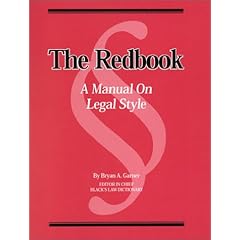
In Legal Analysis and Research class, my professor, Smith, recommended a book titled "The Redbook" by Mr. Garner, an editor of Black's Law Dictionary. While I searched that book in Amazon.com, I found his another book, "The Element of Legal Style, 2nd." In the introductionary section of this book, Mr. Garner stated this book would be another version of "The Element of Style" for LAW students and lawyers.
Yes! This is it. This is what I've been looking for.
Tuesday, December 26, 2006
A Brief history of the Bill of Rights
After Civil War (1861 ~ 1865), a second Bill of Rights (the Thirteenth, Fourteenth and Fifteenth amendments) - outlawing slavery, guaranteeing equal protection of the laws, assuring the right to vote to members of racial minorities.
1919, the Nineteenth Amemdment - women's right to vote
1970, the Twenty-fifth Amendment - right to vote for youths 18 and over
cf. For constitutional law, this site, Justice Learning, is so good!
Saturday, December 23, 2006
Kemah, Kemah
Kemah is a small and attractive place for half-day sightseeing.
I enjoyed nice views of Gulf of Maxico.
Friday, December 22, 2006
Museum of Fine Arts in Houston

Houston, as one of big cities in U.S.A., has a lot of advantages. One of them is to have many attractions like Museum of Fine Arts(MFA).
I've been to MFA today. One good news is that the admission is free on every Thursday.
The photo above is not taken in MFA. I took it in a sculpture garden in front of MFA.
It was so amazing to see the valuables from Aztec, Maya, Inca civilizations. I strongly recommend it to you.
Thursday, October 26, 2006
Law school ranking article from Posner
It's quite fun that Richard Posner published a paper about Law school ranking. Surely, his law & economics viewpoints would be the basis of this article.
I didn't read it and will not read it, but it's funny.
Monday, October 16, 2006
Writing Tip - Parallelism
October 16, 2006
Writing Tip of the Week
Parallelism
1. Items in a series should be in parallel form to make a sentence easy to follow. Parallelism is achieved by joining words with similar words: nouns with nouns, adjectives with adjectives, adverbs with adverbs, prepositions (or prepositional phrases) with prepositions, and so forth.
The defense argued that the evidence was inconclusive, prejudicial, and irrelevant. (adjectives)
The defendant claims that on the day of the murder he was at home alone washing his car, mowing his lawn, and bathing his dog. (gerund phrases)
The witness told the police officer that the car rolled down the hill, over the lawn, and into the swimming pool. (prepositional phrases)
2. Use Parallel Structure With Coordinating Conjunctions. In general, use the same grammatical structure on both sides of any of the coordinating conjunctions—and, but, or, nor, so, yet.
Nonparallel Louise spent three years in Houston going to law school and clerked for a tax firm.
Parallel Louise spent three years in Houston going to law school and clerking for a tax firm.
3. Use Parallel Structure With Correlative Conjunctions. Use the same structure after both parts of a correlative conjunction—either . . . or, both . . . and, neither . . . nor, not . . . but, not only . . . but also, just as . . . so, whether . . . or.
Nonparallel I told my father that my intentions were either to study law or learning tenor saxophone.
Parallel I told my father that my intentions were either to study law or to learn to play tenor saxophone.
Nonparallel The purpose of the rule is to ensure that actual notice is provided either by personal or constructive service.
Parallel The purpose of the rule is to ensure that actual notice is provided either by personal or by constructive service. Or
Parallel The purpose of the rule is to ensure that actual notice is provided by either personal or constructive service.
Adapted from: St. Martin’s Handbook-- Lunsford and Connors
The Legal Writing Handbook-- Oates, Enquist, and Kunsch
Prepared by James Wright and Chris Dunn
Saturday, October 14, 2006
"Pencil Case" episode
But, after several days, I found my pencil case in Lost&Found office of law library. Below is the e-mail I sent to my classmates.
-----------------------------------------------------------------------------------
Note) Sorry to mess up your mail box. If you don’t know or have any interest in my pencil case, just ignore this mail. ^_^
First of all, I really appreciate people who were concerned about my pencil case. Some of you might wonder why I was obsessed with a cheap pencil case.
I have carried a thumb-sized, multi functional, 1G bytes, MP3 player in the pencil case. Because it’s hard for me to keep track of lectures in classes, I record them using my MP3.
As I mentioned to some of you, I gave up finding the pencil case and MP3 player and bought new ones. But, MP3 players I bought from Circuit City and Best Buy were not as satisfactory as the one I used. So, I returned them and ordered the same model to Amazon.com. It was scheduled to arrive in my house at 1 o’clock.
Today, around noon, I was in a hurry to go home to get the ordered package from UPS guy. While I went to my car, I saw a gold-colored tumbler dropped on the ground of the parking lot. Well, the tumbler didn’t look expensive. I was busy. I didn’t start to rescue the tumbler and I had my autonomy not to pick up that tumbler, so there was no `special relationship` between me and the tumbler. I didn’t have any duty… ^^ But, suddenly, the tumbler reminded me of my adorable pencil case. (Well, the tumbler might whisper to me, “save me, save me. Don’t leave me here in hot ground.”) I lost the same kind of stuff a few days ago. The owner might have the same feelings that I got.
So, I took the tumbler on the ground and went to the library. I met the assistant who was in charge of Lost & Found. I already met him three times these days. I said “I got this one on the ground of parking lot. The owner might come here to get it back.” The assistant just nodded and didn’t promptly move to the inside room for Lost & Found. In the moment I turned my back and headed for the parking lot again, I just recalled my pencil case again. I gave it up, but, I wanted to check it one more time. I talked to the assistant, “You’ll go to Lost & Found room, right? Would you please check my pencil case again? It’s made of fabric and blue-colored, as you know.” Carrying the tumbler, he slowly moved to the inside room. After a few seconds, he came back. My pencil case was in his hand!!! Thank god.
I got a lesson from this episode – “Heaven helps those who help others.”
Did anyone drop a gold-colored tumbler on the ground, today? It’s in the library. ^_^
Dae-Gunn.
Friday, September 08, 2006
Wednesday, September 06, 2006
Free Lunch weeks
It was quite a good chance to know the various interests of our students. The representative students present the yearly plan for their associations at the meeting.
If you have any special interest around the law, you can fulfill it with other affiliates here.
Thursday, August 31, 2006
1L life started
I'll do my best to survive, anyway.
Friday, April 28, 2006
Sunday, April 02, 2006
Lanking : Intellectual Property. 2007
Lanking : Intellectual Property
1. U.C. Berkeley
2. Standford
3. George Washington
4. Santa Clara
5. U. of Houston
6. Cardozo-Yeshiva Univ.
7. Duke
Franklin Pierce
9. IIT-Kent
10. Columbia Univ.